जब मैंने 12th pass की, तो मेरे पड़ोस के एक भाई ने Railway में job पाई थी Group D में। उन्होंने बताया कि बिना coaching के, सिर्फ 5 महीने की self-study से उनका selection हुआ। मुझे पहले यकीन नहीं हुआ। लेकिन जब मैंने खुद syllabus देखा Math Class 10 level, Science Class 10 level, Reasoning basic तो समझ आया कि Railway Group D वाकई एक ऐसा exam है जो मेहनत और सही strategy से crack हो सकता है। यह article उसी journey का road map है।
1. Railway Group D क्यों? एक Honest बात
India में government jobs की बात होती है तो Railway का नाम सबसे पहले आता है और इसकी वजह है। Indian Railways दुनिया के सबसे बड़े employers में से एक है। हर साल लाखों vacancies आती हैं, और Group D उन सबमें सबसे accessible है क्योंकि यहाँ सिर्फ 10th pass चाहिए।
Track Maintainer, Helper, Porter, Gateman यह सब Group D की posts हैं। एक बार Railway में आ गए, तो promotion, job security, free railway pass, medical सब कुछ मिलता है। Private job की uncertainty से यह हज़ार गुना बेहतर है।
कुछ important numbers:
- 1 लाख+ vacancies हर cycle में
- Minimum qualification: 10th Pass
- Starting salary: ₹18,000–₹35,000
- Preparation time: 4–6 महीने
मेरी बात: Railway Group D का सबसे बड़ा advantage यह है कि इसका syllabus Class 10 level का है। अगर आपने 10th या 12th किसी भी stream से की है Arts, Commerce, Science तो आप इस exam को crack कर सकते हो। ज़रूरत है सिर्फ 4-5 महीने की focused तैयारी और daily consistency की।
RRB Group D 2026 Update: RRB Group D 2026 notification जल्द expected है। पिछली बार 1,03,769 vacancies आई थीं। अभी से तैयारी शुरू करो notification आने पर directly exam-ready रहो। Official site: indianrailways.gov.in
2. Eligibility कौन Apply कर सकता है?
| Criteria | Details |
| Minimum Qualification | 10th Pass (किसी भी board से) + ITI (कुछ posts के लिए) |
| Age General | 18 से 36 साल |
| Age OBC | 39 साल तक (3 साल relaxation) |
| Age SC/ST | 41 साल तक (5 साल relaxation) |
| Attempts | कोई limit नहीं age limit में रहते हुए |
| Physical Standards | Height, Weight, Vision post-wise vary करता है |
| Nationality | Indian citizen होना ज़रूरी है |
ITI के बारे में: कुछ Group D posts के लिए 10th के साथ ITI (Industrial Training Institute) certificate ज़रूरी होता है। अगर ITI नहीं है तो भी बहुत सारी posts के लिए eligible हो official notification में check ज़रूर करो।
यह भी पढ़ें: Bank Exam Preparation Strategy for Beginners (IBPS/SBI)
3. Exam Pattern CBT और Physical Test
Railway Group D का selection process तीन stages में होता है। तीनों में qualify करना ज़रूरी है।
Stage 1 Computer Based Test (CBT)
| Subject | Questions | Marks |
| Mathematics | 25 | 25 |
| General Intelligence & Reasoning | 30 | 30 |
| General Science | 25 | 25 |
| General Awareness & Current Affairs | 20 | 20 |
| Total | 100 | 100 |
Time: 90 minutes | Negative Marking: हर गलत answer पर 1/3 mark कटता है।
Stage 2 Physical Efficiency Test (PET)
| Task | Male | Female |
| Weight Lifting & Carrying | 35 kg 100 meters in 2 minutes | 20 kg 100 meters in 2 minutes |
| Running | 1000 meters in 4 min 15 sec | 1000 meters in 5 min 40 sec |
Stage 3 Document Verification (DV)
PET qualify करने के बाद original documents verify होते हैं 10th certificate, age proof, category certificate (अगर applicable हो)। यह सिर्फ verification है कोई exam नहीं।
Important: PET qualifying nature का है इसके marks final merit में नहीं जुड़ते। Final selection सिर्फ CBT के marks पर होता है। इसलिए CBT में maximum marks लाना सबसे ज़रूरी है।
4. Subject-wise Syllabus और Strategy
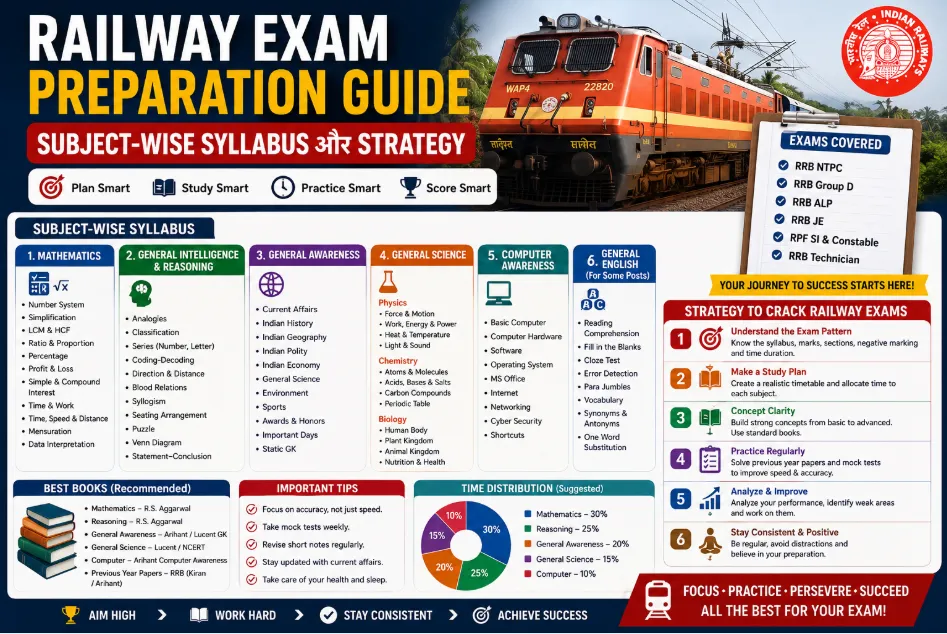
Mathematics (25 Marks)
- Number System LCM, HCF, Fractions, Decimals
- Percentage, Profit & Loss, Discount
- Simple & Compound Interest, Ratio & Proportion
- Average, Time & Work, Time Speed Distance
- Area & Volume Mensuration (Basic)
- Algebra Basic equations, Simplification
- Trigonometry Basic (sin, cos, tan values)
- Data Interpretation Bar graph, Pie chart, Table
General Intelligence & Reasoning (30 Marks)
- Analogies, Alphabetical Series, Number Series
- Coding-Decoding, Blood Relations
- Direction Sense, Ranking, Venn Diagrams
- Syllogism, Statement & Conclusion
- Non-Verbal Mirror Image, Paper Folding, Figure Completion
- Mathematical Operations, Missing Numbers
General Science (25 Marks)
- Physics Motion, Force, Work & Energy, Sound, Light, Electricity
- Chemistry Matter, Acids & Bases, Metals & Non-metals, Carbon compounds
- Biology Cell, Tissues, Life Processes, Reproduction, Heredity
- सब Class 9-10 NCERT Science से यही सबसे important source है
General Awareness & Current Affairs (20 Marks)
- Current Affairs Last 6 months (National + International)
- Indian History Freedom Struggle, Important Events
- Indian Geography Rivers, Mountains, States, Capitals
- Indian Polity Constitution basics, Parliament, President
- Sports, Awards, Important Days, Books & Authors
- Railway से related GK Zones, Headquarters, Important Facts
मेरी Real बात: Railway Group D में General Science सबसे important subject है 25 marks और ज़्यादातर students इसे ignore करते हैं। NCERT Class 9-10 Science की book को एक बार thoroughly पढ़ो 20+ marks guarantee हो जाते हैं। यह section topper बनाता है या तोड़ता है।
5. Small City से Railway Real Strategy
Gorakhpur, Varanasi, Patna, Allahabad, Agra इन शहरों से हर cycle में हज़ारों candidates Railway में select होते हैं। Delhi या बड़े शहरों की coaching ज़रूरी नहीं है ज़रूरी है सही resources और consistent daily practice।
YouTube = Free Coaching: Gagan Pratap Sir (Math), Sahil Sir (Reasoning), Naveen Sir (Science) Railway के लिए best free content यहाँ मिलता है।
NCERT सबसे पहले: Class 9-10 की Science और Math NCERT यह Railway Group D की असली foundation है। पहले यह पढ़ो।
Previous Year Papers: 2018, 2019, 2022 के RRB Group D papers ज़रूर solve करो। Pattern और difficulty level समझ आएगा।
Physical Prep साथ में: CBT की तैयारी के साथ-साथ रोज़ running और weight lifting practice दोनों साथ चलाओ।
One Book Rule: हर subject के लिए एक ही अच्छी book choose करो। Math के लिए Rakesh Yadav या Arihant, Reasoning के लिए R.S. Aggarwal, GK के लिए Lucent। एक book 3 बार पढ़ना, 3 books एक बार पढ़ने से बेहतर है।
6. 5-Month Study Plan
Month 1 Foundation:
- NCERT Class 9-10 Science शुरू करो
- Math: Basic Arithmetic (%, Ratio, Avg)
- Reasoning: Basic types (Analogy, Series)
- GK: Lucent की static GK शुरू करो
- Physical: रोज़ running शुरू करो
Month 2 Core Topics:
- Science: Physics + Chemistry complete
- Math: Time-Work, TSD, SI-CI
- Reasoning: Coding, Blood Relations, Direction
- GK: History + Geography
- Week में 1 Sectional Test
Month 3 Advanced:
- Science: Biology complete + Revision
- Math: Mensuration, Algebra, DI
- Reasoning: Non-Verbal, Syllogism
- Current Affairs daily पढ़ो
- हफ्ते में 2 Full Mock Tests
Month 4 Practice:
- Previous Year Papers (2018–2022)
- Weak topics पर extra focus
- Speed और Accuracy improve करो
- हफ्ते में 3 Mock Tests
- Physical: Weight lifting practice बढ़ाओ
Month 5 Revision + Mock:
- पूरे syllabus का revision
- Short formula notes बनाओ
- Daily 1 Full Mock Test
- Current Affairs final revision
- Calm रहो exam ready हो
यह भी पढ़ें: UPSC Preparation Strategy for Beginners in 2026
7. Daily Routine जो Actually काम करती है
| Time | Task |
| 5:00–5:30 AM | उठो, fresh हो 10 min warm-up, दिमाग और body दोनों activate करो |
| 5:30–6:30 AM | Physical Practice Running (1 km से शुरू करो, धीरे-धीरे बढ़ाओ) |
| 6:30–7:00 AM | Fresh हो, Breakfast करो energy के लिए ज़रूरी है |
| 7:00–9:00 AM | Mathematics सुबह का दिमाग Math के लिए सबसे sharp होता है |
| 9:00–11:00 AM | General Science NCERT पढ़ो, notes बनाओ, formulas याद करो |
| 11:00–12:00 PM | Reasoning रोज़ variety के questions practice करो |
| 12:00–1:30 PM | Lunch + Rest 30-40 min आराम ज़रूरी है |
| 1:30–3:00 PM | General Awareness GK + Current Affairs notes बनाते जाओ |
| 3:00–4:30 PM | Previous Year Questions + Mock Test Practice |
| 4:30–5:30 PM | Weight Lifting Practice 35 kg (male) / 20 kg (female) carry करने की practice |
| 5:30–7:00 PM | Revision उसी दिन पढ़े topics दोबारा देखो यह step skip मत करो |
| 7:00–9:00 PM | Family time + Dinner mental health के लिए ज़रूरी है |
| 9:00–10:00 PM | कल का plan बनाओ + गलत questions review करो |
| 10:00 PM | सो जाओ 7 घंटे की नींद body और brain दोनों के लिए must है |
Physical Test Tip: Running और weight lifting की practice exam से कम से कम 3 महीने पहले शुरू करो। पहले दिन से full attempt मत करो धीरे-धीरे stamina build होता है। रोज़ थोड़ा-थोड़ा बढ़ाओ। Last minute physical preparation काम नहीं करती।
8. Common Mistakes जो Beginners करते हैं
Mistake 1 General Science को Ignore करना बहुत से students Math और Reasoning पर focus करते हैं और Science छोड़ देते हैं। लेकिन 25 marks का Science section आसान है NCERT Class 9-10 से directly questions आते हैं। यह section सबसे ज़्यादा marks दिला सकता है अगर properly पढ़ा जाए।
Mistake 2 Physical Test की तैयारी Last Moment पर करना बहुत से students CBT crack कर लेते हैं लेकिन Physical Test में fail हो जाते हैं क्योंकि running और weight lifting की practice नहीं की होती। Physical preparation CBT के साथ-साथ Day 1 से शुरू करो। बाद में शुरू करना बहुत मुश्किल होता है।
Mistake 3 Negative Marking को Ignore करना Railway Group D में 1/3 negative marking है। बहुत से students guess करते रहते हैं और score minus में चला जाता है। Rule: अगर 70% confident हो तो attempt करो, नहीं तो skip करो। Mock tests में यह habit develop करो।
Mistake 4 सिर्फ एक Subject पर Focus करना कुछ students सिर्फ Math पढ़ते हैं, कुछ सिर्फ Reasoning। लेकिन Railway में हर subject में minimum cut-off होती है एक में भी कम marks आए तो selection नहीं होगा। चारों subjects daily पढ़ो।
Mistake 5 Mock Test नहीं देना सिर्फ पढ़ते रहना, practice test नहीं देना यह सबसे बड़ी गलती है। Mock test से time management, speed, और exam pattern की understanding होती है। हफ्ते में कम से कम 1 full mock test ज़रूरी है।
Mistake 6 Current Affairs को Daily नहीं पढ़ना 20 marks का GK + Current Affairs section है और Current Affairs से 8-10 questions directly आते हैं। रोज़ 15-20 minute Current Affairs के लिए निकालो। Monthly compilation करते जाओ revision आसान होगा।
9. FAQs
Q1. Railway Group D के लिए 10th में कितने marks चाहिए?
कोई minimum percentage नहीं है बस 10th pass होना ज़रूरी है किसी भी recognized board से। Arts, Science, Commerce कोई भी stream चलेगी। Final selection CBT के marks पर होता है 10th के marks matter नहीं करते।
Q2. क्या बिना coaching के Railway Group D crack हो सकता है?
हाँ, बिल्कुल। Railway Group D का syllabus Class 10 level का है। YouTube पर Gagan Pratap Sir (Math), Sahil Sir (Reasoning), Naveen Sir (Science) यह सब free में excellent content देते हैं। NCERT books, एक अच्छी practice book, और daily mock tests यह तीन चीज़ें काफ़ी हैं।
Q3. Railway Group D की salary कितनी होती है?
7th Pay Commission के बाद Group D में Pay Level 1 मिलता है Basic Pay ₹18,000। इसमें HRA, DA, Transport Allowance जोड़ने के बाद total in-hand salary ₹25,000–₹35,000 per month हो जाती है। इसके अलावा free railway pass, medical facilities, और pension का benefit मिलता है।
Q4. Physical Test कितना tough होता है?
Male के लिए: 35 kg weight 100 meters carry करना 2 minutes में + 1000 meters run 4 min 15 sec में। Female के लिए: 20 kg weight 100 meters में + 1000 meters run 5 min 40 sec में। यह challenging है लेकिन impossible नहीं बस 3 महीने पहले से practice शुरू करनी होगी।
Q5. Railway Group D में posting कहाँ मिलती है?
Posting उस Railway Zone में मिलती है जिसके RRB (Railway Recruitment Board) के अंतर्गत आपने apply किया है। UP के students RRB Allahabad, RRB Lucknow के through apply करते हैं तो posting UP/nearby states में मिलने की संभावना ज़्यादा होती है। Home state posting guaranteed नहीं होती लेकिन preference दी जाती है।
Q6. Lucent GK book पर्याप्त है Railway के लिए?
हाँ, Static GK के लिए Lucent बहुत अच्छी book है। लेकिन Current Affairs के लिए अलग से पढ़ना होगा monthly current affairs PDF या रोज़ newspaper। Lucent + Current Affairs दोनों मिलकर GK section cover करते हैं।
Q7. Railway Group D और SSC GD में कौन सा बेहतर है?
दोनों की अपनी value है। Railway Group D में physical test comparatively easier है (running + weight lifting), salary similar है, और Railway के अतिरिक्त benefits (free pass, medical) बहुत attractive हैं। SSC GD में paramilitary में posting होती है adventure और responsibility अलग होती है। अगर दोनों के लिए eligible हो तो दोनों के form भरो syllabus काफ़ी similar है।
Last Baat Freshers और Small City Students के लिए
Railway Group D कोई impossible exam नहीं है यह एक systematic और achievable goal है। Class 10 level का syllabus, 4-5 महीने की तैयारी, daily physical practice और आप exam-ready हो सकते हो। Varanasi, Patna, Gorakhpur के हज़ारों students हर cycle में Railway में select होते हैं। अगला नाम आपका हो सकता है बस आज से शुरू करो। All the best!
Disclaimer: इस article में दी गई information official websites और personal experience पर based है। Apply करने से पहले official notification ज़रूर check करें। Official Sites: rrbcdg.gov.in | indianrailways.gov.ingov.in

I am Abhay Patel, working as a professional content writer on this website. With over 4 years of experience in article writing, I specialize in delivering well-researched and reliable information.
My expertise lies in covering topics such as latest job updates, government results, admissions, and recruitment notifications. Every article I create is carefully researched to ensure it is accurate, authentic, and trustworthy.
My goal is to present information in a clear, simple, and timely manner, helping readers make informed decisions without confusion.