जब मैंने पहली बार UPSC का नाम सुना था, तो दिल में एक सपना जागा की मुझे भी IAS बनना है, district collector बनना है। लेकिन साथ में यह डर भी था कि हम तो छोटे शहर के रहने वाले हैं, English medium से पढ़े नहीं है, Delhi जाकर coaching लेने के पैसे नहीं हैं। क्या हमारे जैसे लोग UPSC crack कर सकते हैं? जब मैंने research किया तो पता चला की हर साल UPSC toppers में बड़ी संख्या उन्हीं की होती है जो छोटे शहरों से आते हैं, जिन्होंने self-study की है। यह article उन्हीं के लिए है
1. UPSC क्या है और IAS/IPS कैसे बनते हैं?
UPSC यानी Union Public Service Commission यह India का सबसे prestigious exam है। इसे crack करके आप IAS (Indian Administrative Service), IPS (Indian Police Service), IFS (Indian Foreign Service) जैसी top services में जा सकते हैं।
IAS बनने का मतलब है जिले का Collector बनना, policies implement करना, लाखों लोगों की ज़िंदगी में सीधा फ़र्क डालना। यह सिर्फ एक job नहीं है यह एक responsibility है, एक calling है।
कुछ important numbers:
- 900 total vacancies हर साल
- 10 लाख+ aspirants हर साल
- 3 stages: Prelims, Mains, Interview
- 1–3 साल average preparation time
मेरी बात: UPSC difficult ज़रूर है लेकिन impossible नहीं। हर साल ऐसे students select होते हैं जो UP, Bihar, MP, Rajasthan के छोटे शहरों से आते हैं, जिन्होंने Hindi medium में पढ़ा है, जिन्होंने self-study की है। फ़र्क सिर्फ strategy और consistency का होता है।
UPSC 2026 Update: UPSC CSE 2026 notification February 2026 में आई है। Prelims exam 25 May 2026 को है। अगर इस साल नहीं दे पा रहे तो 2027 की preparation अभी से शुरू करो।
2. Eligibility कौन Apply कर सकता है?
| Criteria | Details |
| Qualification | किसी भी subject में Graduation (any university) |
| Age General | 21 से 32 साल |
| Age OBC | 35 साल तक (3 साल relaxation) |
| Age SC/ST | 37 साल तक (5 साल relaxation) |
| Attempts General | 6 attempts |
| Attempts OBC | 9 attempts |
| Attempts SC/ST | Unlimited (age limit तक) |
| Final Year Students | Prelims दे सकते हैं |
| Medium | Hindi या English दोनों में दे सकते हैं |
Important: UPSC में Hindi medium में exam देना बिल्कुल valid है। Mains में Hindi optional subject भी ले सकते हो। बहुत से toppers Hindi medium से आए हैं यह कोई disadvantage नहीं है।
यह भी पढ़ें: NDA Exam Preparation Guide- Eligibility, Syllabus & Tips
3. Exam Pattern Prelims, Mains और Interview
Bank exam में दो stages होती हैं Prelims और Mains। Prelims एक qualifying exam है इसके marks final merit में नहीं जुड़ते। Mains के marks से final selection होता है।
Stage 1: Prelims (Screening Test)
| Paper | Questions | Marks | Time | Nature |
| GS Paper 1 | 100 | 200 | 2 घंटे | Merit में count |
| CSAT Paper 2 | 80 | 200 | 2 घंटे | Qualifying (33% चाहिए) |
Negative Marking: हर गलत answer पर 1/3 marks कटते हैं। Prelims के marks final merit में नहीं जुड़ते।
Stage 2: Mains (यहाँ असली merit बनती है)
| Paper | Subject | Marks |
| Paper A | Indian Language (Qualifying) | 300 |
| Paper B | English (Qualifying) | 300 |
| Paper 1 | Essay | 250 |
| Paper 2 | GS 1 History, Geography, Society | 250 |
| Paper 3 | GS 2 Governance, Polity, IR | 250 |
| Paper 4 | GS 3 Economy, Environment, Science | 250 |
| Paper 5 | GS 4 Ethics, Integrity | 250 |
| Paper 6 & 7 | Optional Subject (2 papers) | 500 |
| Total (Merit में) | 1750 |
Stage 3: Interview / Personality Test
Mains qualify करने के बाद 275 marks का Interview होता है। यह सिर्फ knowledge test नहीं personality, decision-making, और सोचने का तरीका देखा जाता है। Final merit = Mains (1750) + Interview (275) = 2025 marks
4. Subject-wise Syllabus और Strategy
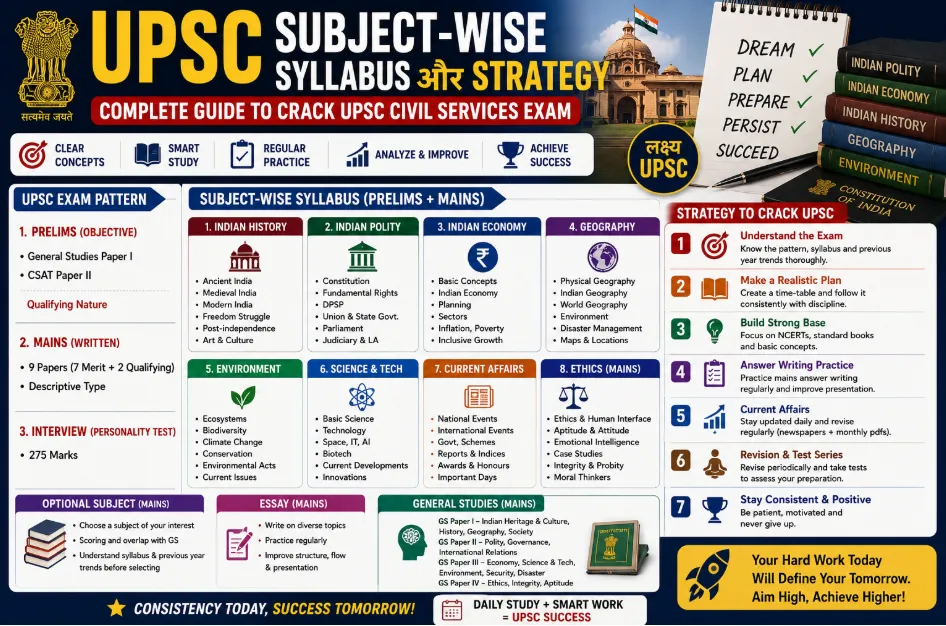
General Studies: Prelims GS Paper 1
- Indian History: Ancient, Medieval, Modern (Freedom Struggle बहुत important)
- Indian Geography: Physical, Human, Economic Geography
- Indian Polity: Constitution, Parliament, Judiciary, Panchayati Raj
- Indian Economy: GDP, Inflation, Budget, Banking, Schemes
- General Science: Physics, Chemistry, Biology (basic concepts)
- Current Affairs: Last 12 months (बहुत important)
- Environment & Ecology: Climate Change, Biodiversity
CSAT: Paper 2 (Qualifying)
- Reading Comprehension सबसे ज़्यादा questions यहाँ से
- Basic Numeracy Class 10 level Math
- Logical Reasoning और Analytical Ability
- Decision Making और Problem Solving
- Note: सिर्फ 33% यानी 66/200 चाहिए लेकिन ignore मत करो
Essay Writing Mains Paper 1
- 2 essays लिखने होते हैं 125-125 marks के
- Topics: Social issues, Philosophy, Governance, Technology
- यह subject practice से improve होता है रोज़ writing करो
- Structure important है Introduction, Body, Conclusion clearly हो
Optional Subject 500 Marks
- 48 subjects में से कोई भी एक choose करो
- Popular choices: History, Geography, Political Science, Sociology, Public Administration, Hindi Literature
- अपनी graduation के subject को priority दो familiarity advantage देती है
- यह 500 marks का है यहाँ rank बनती या बिगड़ती है
मेरी Real बात: UPSC का syllabus बहुत बड़ा लगता है शुरू में लेकिन एक बात समझो। NCERT की books Class 6 से 12 तक यह UPSC की foundation हैं। पहले इन्हें thoroughly पढ़ो। NCERT clear होने के बाद standard books जैसे Laxmikanth (Polity), Bipin Chandra (History), Spectrum (Modern History) पढ़ो। एक साथ सब मत उठाओ।
5. Small City से UPSC Real Strategy
Varanasi, Allahabad, Patna, Lucknow, Gorakhpur इन शहरों से हर साल UPSC toppers निकलते हैं। Delhi coaching का मतलब यह नहीं कि वो ज़्यादा capable हैं उनके पास बस resources ज़्यादा हैं। आप resources की कमी को smart strategy से पूरा कर सकते हो।
YouTube = Free Coaching: Unacademy, Drishti IAS, StudyIQ यह सब free content देते हैं। Delhi coaching जितना ही quality content घर बैठे मिलता है।
Newspaper Daily: The Hindu या Indian Express रोज़ पढ़ो। Current Affairs का यह सबसे authentic source है। Notes बनाते जाओ।
Library का Use: District library, college library NCERT और standard books free में मिलती हैं। Daily यहाँ जाओ।
Study Group बनाओ: 2-3 serious students का group बनाओ। Discussion से concepts clear होते हैं और motivation बनी रहती है।
Small City Advantage: Small city में distraction कम होता है, living cost कम है, और family support ज़्यादा होती है। Delhi में जो पैसे coaching पर खर्च होते हैं, वो पैसे आप अच्छी books और test series पर लगाओ। यह ज़्यादा effective है।
एक ज़रूरी बात: UPSC की तैयारी 1-2 साल की long journey है। इस दौरान घर वालों का support बहुत ज़रूरी है। पहले दिन उनसे honestly बात करो timeline बताओ, plan बताओ। उनकी समझ और support तुम्हारी सबसे बड़ी strength बनेगी।
यह भी पढ़ें: How to Prepare for SSC CGL 2026: Complete Study Plan
6. 12-Month Study Plan
Month 1–2 NCERT Foundation:
- Class 6–12 NCERT पढ़ो (History, Geography, Polity, Economy, Science)
- Notes बनाते जाओ खुद के शब्दों में
- Newspaper पढ़ना शुरू करो
- Syllabus और Previous Year Papers देखो
Month 3–4 Standard Books:
- Polity: Laxmikanth पढ़ो
- History: Spectrum (Modern History)
- Geography: G.C. Leong (Physical)
- Economy: Ramesh Singh या NCERT
- Optional Subject शुरू करो
Month 5–6 Depth + Current Affairs:
- Environment & Ecology: Shankar IAS
- Ethics: Lexicon या G. Subba Rao
- Current Affairs compilation बनाओ
- Essay writing practice शुरू करो
- Monthly MCQ practice
Month 7–8 Prelims Focus:
- Previous Year Prelims Papers (10 साल)
- Daily 50 MCQs practice
- CSAT practice शुरू करो
- Weak topics पर extra time दो
- हफ्ते में 1 Full Mock Test
Month 9–10 Mains Preparation:
- Answer writing practice रोज़
- GS 1, 2, 3, 4 detailed notes
- Optional Subject complete करो
- Essay topics practice करो
- Previous Year Mains Papers देखो
Month 11–12 Revision + Mock:
- पूरे syllabus का revision
- Short notes बनाओ
- Full Mock Tests analyze करो
- Current Affairs final revision
- Calm रहो stress नहीं
7. Daily Routine UPSC Aspirants के लिए
| Time | Task |
| 5:00–5:30 AM | उठो, fresh हो 20 min walk या yoga, दिमाग तैयार होगा |
| 5:30–7:30 AM | पहला session सबसे difficult subject सुबह पढ़ो (History/Polity/Economy) |
| 7:30–8:30 AM | Newspaper पढ़ो The Hindu / Indian Express, important points note करो |
| 8:30–9:00 AM | Break Breakfast, हल्का आराम |
| 9:00–11:00 AM | दूसरा session Geography / Environment / Science |
| 11:00–12:30 PM | Answer Writing Practice रोज़ 2-3 Mains answers लिखो |
| 12:30–2:00 PM | Lunch + Rest आराम ज़रूरी है, brain recharge होता है |
| 2:00–4:00 PM | Optional Subject रोज़ 2 घंटे Optional को दो |
| 4:00–4:30 PM | Evening walk दिमाग fresh होगा, ideas आएंगे |
| 4:30–6:30 PM | Current Affairs + Ethics notes बनाते जाओ |
| 6:30–8:00 PM | Revision उसी दिन पढ़े topics दोबारा देखो |
| 8:00–9:30 PM | Family time + Dinner ज़रूरी है, इसे sacrifice मत करो |
| 9:30–10:30 PM | कल का plan बनाओ + MCQ practice (30 questions) |
| 10:30 PM | सो जाओ 7 घंटे की नींद UPSC preparation में must है |
8. Common Mistakes जो Beginners करते हैं
Mistake 1: सीधे Advanced Books से शुरू करना बहुत से beginners सीधे Laxmikanth, Bipin Chandra उठा लेते हैं बिना NCERT पढ़े। फिर कुछ समझ नहीं आता और demotivation हो जाता है। पहले Class 6–12 NCERT पढ़ो। यही foundation है इसके बिना कुछ नहीं टिकेगा।
Mistake 2: Notes नहीं बनाना सिर्फ पढ़ते जाना, notes नहीं बनाना यह revision के वक्त बहुत तकलीफ देता है। अपने notes खुद बनाओ किसी के printed notes पर depend मत करो। Self-made notes revision में 10 गुना ज़्यादा helpful होते हैं।
Mistake 3: Answer Writing Practice न करना Mains में answer writing सबसे ज़्यादा matter करती है लेकिन ज़्यादातर students यह practice exam के 1 महीने पहले शुरू करते हैं। Answer writing Day 1 से शुरू करो। रोज़ 2-3 answers लिखो structure, content, और time management तीनों improve होंगे।
Mistake 4: Optional Subject Late Decide करना 500 marks का optional subject UPSC rank में सबसे बड़ा factor है लेकिन बहुत से students यह 6-8 महीने बाद decide करते हैं। पहले month में ही decide करो। जो subject आपको genuinely interesting लगे और जिसमें आपकी background हो वो choose करो।
Mistake 5: Current Affairs को Ignore करना बहुत से students static syllabus पढ़ते रहते हैं और Current Affairs छोड़ देते हैं। UPSC Prelims में 20-25 questions directly Current Affairs से आते हैं। Newspaper daily पढ़ना यह habit Day 1 से बनाओ।
Mistake 6: Burnout और Quit कर देना 6-8 महीने बाद बहुत से students थक जाते हैं, demotivate हो जाते हैं और छोड़ देते हैं। UPSC marathon है sprint नहीं। रोज़ 8-10 घंटे काफ़ी हैं। Breaks लो, family के साथ time बिताओ, और याद रखो consistency beats intensity हमेशा।
9. FAQs
Q1. क्या बिना coaching के UPSC crack हो सकता है?
हाँ, बिल्कुल। हर साल top 100 में ऐसे candidates होते हैं जिन्होंने self-study की है। YouTube पर Drishti IAS, Unacademy, StudyIQ यह सब free quality content देते हैं। ज़रूरत है सिर्फ structured plan, right resources, और consistent effort की। Coaching direction देती है मेहनत तो आपको ही करनी है।
Q2. UPSC के लिए कौन सी books पहले पढ़ें?
शुरुआत हमेशा NCERT से करो Class 6 से 12 तक (History, Geography, Polity, Economy, Science)। NCERT के बाद: Polity के लिए Laxmikanth, Modern History के लिए Spectrum, Physical Geography के लिए G.C. Leong, Economy के लिए Ramesh Singh। एक साथ सब मत खरीदो पहले NCERT complete करो।
Q3. Hindi medium से UPSC देना कितना effective है?
बहुत effective है। हर साल top rankers में Hindi medium के students होते हैं। Mains में Hindi में लिखने का option है। Hindi Optional subject भी ले सकते हो जिसमें scoring अच्छी होती है। English का basic knowledge newspaper पढ़ने के लिए ज़रूरी है लेकिन fluent English ज़रूरी नहीं।
Q4. Optional Subject कैसे choose करें?
तीन factors देखो: 1) जिस subject में आपकी graduation हो familiarity advantage देता है। 2) Scoring potential History, Geography, Sociology, Public Administration में अच्छे marks आते हैं। 3) Genuine interest 500 marks का subject है, इसे seriously पढ़ना होगा। किसी के कहने पर या trend देखकर choose मत करो।
Q5. Newspaper कौन सा पढ़ें और कैसे पढ़ें?
The Hindu सबसे recommended है UPSC के लिए लेकिन अगर English कमज़ोर है तो Dainik Jagran या Dainik Bhaskar से शुरू करो और धीरे-धीरे The Hindu पर shift करो। Newspaper पढ़ते वक्त: Polity, Economy, International Relations, Environment इन sections पर ज़्यादा focus करो। Notes बनाते जाओ।
Q6. UPSC में कितने attempts लगते हैं average?
Average 2-3 attempts लगते हैं। पहले attempt में बहुत कम लोग select होते हैं लेकिन यह normal है। पहला attempt valuable learning experience है। हर attempt में आप better होते हो। Important यह है कि हर attempt के बाद analyze करो क्या कमी रही, क्या improve करना है।
Q7. UPSC की तैयारी के साथ graduation भी कर सकते हैं?
हाँ, और यह recommended भी है। Graduation final year में Prelims दे सकते हो। Graduation के subjects History, Political Science, Geography, Sociology यह सब UPSC syllabus से overlap करते हैं। Graduation के साथ तैयारी करने से age और attempts दोनों बचते हैं।
Last Baat Beginners और Small City Students के लिए
UPSC India का सबसे difficult exam है लेकिन यह सिर्फ उनके लिए नहीं है जो Delhi में पैदा हुए या English medium में पढ़े। यह उनके लिए है जो genuinely देश के लिए कुछ करना चाहते हैं। Varanasi, Patna, Gorakhpur इन शहरों से IAS निकले हैं और निकलते रहेंगे। आज से शुरू करो NCERT उठाओ, notes बनाओ, newspaper पढ़ो। हर बड़ा सफर एक छोटे कदम से शुरू होता है। All the best!
Disclaimer: इस article में दी गई information official websites और personal experience पर based है। Apply करने से पहले official notification ज़रूर check करें। Official Site: upsc.gov.in
I am Abhay Patel, working as a professional content writer on this website. With over 4 years of experience in article writing, I specialize in delivering well-researched and reliable information.
My expertise lies in covering topics such as latest job updates, government results, admissions, and recruitment notifications. Every article I create is carefully researched to ensure it is accurate, authentic, and trustworthy.
My goal is to present information in a clear, simple, and timely manner, helping readers make informed decisions without confusion.