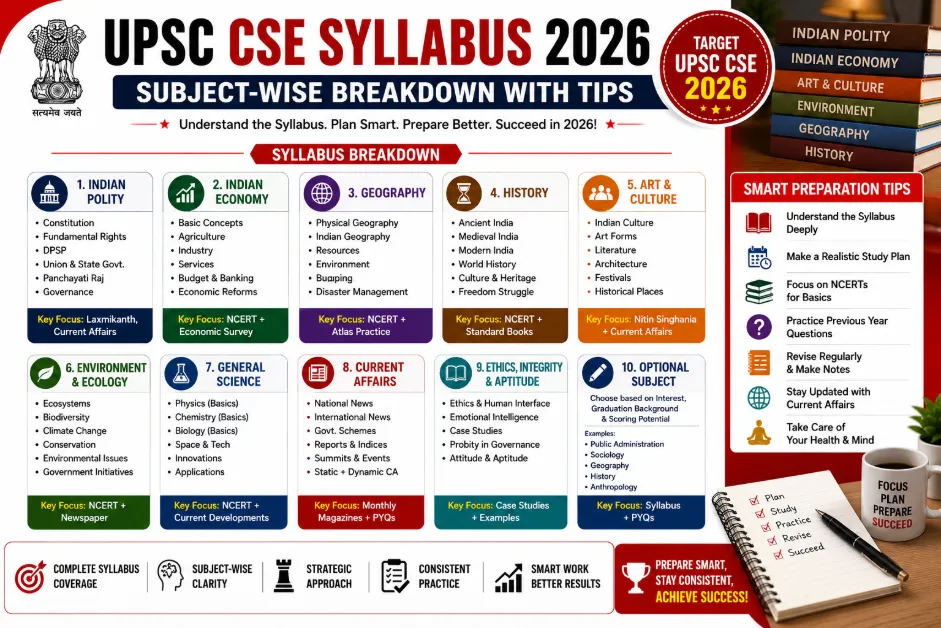
जब मैंने पहली बार UPSC CSE का official syllabus download किया था तो उसमे 9 papers, 48 optional subjects, Essay, Ethics, Interview मैं 10 मिनट तक बस screen देखता रहा। इतना बड़ा syllabus देखकर लगा कि यह तो life भर नहीं होगा। फिर एक senior ने समझाया की UPSC का Syllabus बड़ा दिखता है लेकिन हर topic interconnected है। एक बार structure समझ लो फिर यह mountain नहीं, एक well-organized map लगेगा।’ यह article वही map है।”
1. UPSC CSE Structure Big Picture पहले समझो
UPSC CSE को समझने का सबसे अच्छा तरीका है पहले पूरी structure देखो, फिर details में जाओ। 3 stages हैं Prelims, Mains, और Interview। हर stage में qualify करना ज़रूरी है।
| Stage | Papers | Total Marks | Nature |
| Prelims | GS Paper 1 + CSAT (Paper 2) | 400 (200+200) | Screening Merit में GS 1 ही count |
| Mains | 9 Papers (2 qualifying + 7 merit) | 1750 (merit में) | Descriptive यहाँ rank बनती है |
| Interview | Personality Test | 275 | Merit में count होता है |
| Final Merit | Mains + Interview | 2025 | इसी पर final selection |
Important numbers:
- 9 total Mains papers
- 1750 Mains merit marks
- 275 Interview marks
- 48 optional subjects
Key Insight: Prelims एक दरवाज़ा है सिर्फ qualify करना है। असली competition Mains में है। इसलिए शुरू से Mains को ध्यान में रखकर पढ़ो। जो Prelims के लिए पढ़ते हैं वो Prelims में अटक जाते हैं जो Mains के लिए पढ़ते हैं वो दोनों clear करते हैं।
UPSC CSE 2026 Update: UPSC CSE 2026 Prelims 25 May 2026 को है। Mains अक्टूबर 2026 में expected है। Notification February 2026 में आई थी।
2. Prelims Syllabus GS Paper 1 + CSAT
GS Paper 1 General Studies 200 Marks | 100 Questions | 2 घंटे | Merit में count होता है
यह paper merit में count होता है। यहाँ जितने marks आएंगे उतनी Mains में seat पक्की होगी।
- Indian History: Ancient (Indus Valley से Maurya तक), Medieval (Mughal, Delhi Sultanate), Modern (1857 से Independence तक), Freedom Struggle
- Indian & World Geography: Physical Geography, Indian Geography (Rivers, Mountains, Soil, Climate), World Geography, Economic Geography
- Indian Polity & Governance: Constitution, Parliament, Judiciary, Panchayati Raj, Public Policy, Rights Issues
- Economic & Social Development: Economic Development, Poverty, Inclusion, Demographics, Social Sector Initiatives
- Environment, Ecology & Biodiversity: Climate Change, Biodiversity, Environmental Impact Assessment
- General Science: Physics, Chemistry, Biology Class 10 level basics
- Current Affairs: National & International events last 12 months specially
GS Paper 1 Strategy: यहाँ Current Affairs + Polity + History सबसे important हैं इन तीनों से मिलकर 60-70% questions आते हैं। NCERT Class 6-12 thoroughly पढ़ो। Newspaper daily पढ़ो। Previous 10 year papers solve करो pattern clear होगा।
CSAT Paper 2 (Qualifying) 200 Marks | 80 Questions | 2 घंटे | सिर्फ 33% चाहिए (66/200)
CSAT UPSC qualifying nature का है merit में count नहीं होता।
- Reading Comprehension: सबसे ज़्यादा questions 40-50 questions यहाँ से
- Basic Numeracy: Class 10 level Math Percentage, Ratio, Simple Equations
- Logical Reasoning & Analytical Ability: Series, Coding, Blood Relations basics
- Decision Making & Problem Solving
- English Comprehension: Basic English passages
CSAT UPSC Warning: हर साल बहुत से strong GS candidates CSAT में 33% नहीं ला पाते और disqualify हो जाते हैं। Reading Comprehension practice ज़रूरी है। 2 महीने dedicated CSAT practice इतना काफ़ी है।
3. Mains Syllabus यहाँ Rank बनती है
Mains में 9 papers होते हैं। 2 qualifying हैं (Indian Language + English), 7 merit में count होते हैं। यहाँ लिखावट, analysis, और presentation सब matter करते हैं।
Paper 1 Essay (250 Marks)
- 2 sections में 2-2 topics दिए जाते हैं कोई एक choose करना होता है
- Topics: Social Issues, Philosophy, Governance, Technology, Ethics, Development
- Length: 1000-1200 words per essay
- यहाँ सिर्फ knowledge नहीं perspective और expression देखा जाता है
Essay Tip: Essay में structure सबसे important है Introduction (Hook + Thesis), Body (Multiple perspectives), Conclusion (Way forward)। रोज़ एक editorial पढ़ो और उसकी structure note करो। हफ्ते में 1 full essay ज़रूर लिखो।
GS Paper 2 History, Geography, Society (250 Marks)
- History: Indian Culture (Art, Architecture, Literature), Post-Independence India, World History (18th-20th Century)
- Geography: Physical, Human Geography का India और World पर effect, Natural Resources, Disasters
- Society: Indian Society, Diversity, Role of Women, Urbanization, Social Empowerment, Communalism, Secularism
Tip: GS 1 में Indian Culture और Post-Independence History बहुत important हैं UPSC इन्हें consistently पूछता है। NCERT Class 11-12 History + Bipin Chandra “India Since Independence” यह दोनों must-read हैं।
GS Paper 3 Governance, Polity, IR (250 Marks)
- Indian Polity: Constitution features, Parliament, Judiciary, State Governments, Federalism
- Governance: Government policies, e-Governance, RTI, Citizens’ Charter, Role of Civil Services
- Social Justice: Welfare schemes, Health, Education, Poverty alleviation
- International Relations: India’s bilateral relations, International bodies (UN, WTO, IMF), India’s foreign policy
GS 2 Tip: Laxmikanth की “Indian Polity” यह book GS 2 की Bible है। इसे कम से कम 3 बार पढ़ो। International Relations के लिए newspaper + Ministry of External Affairs website। Current Affairs यहाँ बहुत ज़्यादा matter करती है।
GS Paper 4 Economy, Environment, Science & Technology (250 Marks)
- Economy: Indian Economy, Planning, Growth, Development, Agriculture, Industry, Infrastructure, Budget, Taxation
- Environment: Conservation, Environmental Laws, Climate Change, International conventions
- Science & Technology: Science developments, IT, Space, Defence technology, Bio-technology
- Internal Security: Terrorism, Border management, Money laundering, Cyber security
- Disaster Management: Types, Preparedness, NDMA framework
GS 3 Tip: Economy के लिए Ramesh Singh की “Indian Economy” standard book है। Science & Technology के लिए रोज़ newspaper का Science section पढ़ो। Environment के लिए Shankar IAS की book यह best resource है।
GS Paper 5 Ethics, Integrity & Aptitude (250 Marks)
- Ethics & Human Interface: Essence, Determinants, Consequences of Ethics, Values, Moral Development
- Attitude: Content, Structure, Function, Moral & Political Attitudes
- Aptitude & Foundational Values for Civil Services: Integrity, Impartiality, Non-partisanship, Tolerance
- Emotional Intelligence: Concepts, Utility in Civil Services
- Case Studies: Real-life ethical dilemmas बहुत important, 125 marks के case studies होते हैं
GS 4 Warning: बहुत से students Ethics को light लेते हैं यह गलती है। 250 marks का paper है और Case Studies में अपना perspective और reasoning देखा जाता है। Lexicon (by Chronicle) या G. Subba Rao book + daily case study practice ज़रूरी है।
4. Optional Subject सबसे Important Decision
Optional Subject 500 marks (2 papers × 250) का होता है और यह UPSC rank में सबसे बड़ा factor है।
| Optional Choose करते वक्त यह देखो | क्यों Important है |
| Genuine Interest | 500 marks का subject है 2+ साल इसे पढ़ना होगा |
| Graduation Background | जिस subject में graduation हो familiarity advantage है |
| GS Overlap | History, Geography, Political Science, Sociology GS से overlap |
| Scoring Potential | PSIR, Sociology, Geography, Hindi Literature consistently high scores |
| Study Material Availability | Hindi medium में material available होना चाहिए |
Popular Optional Subjects (⭐ = Most Popular): History ⭐, Geography ⭐, Political Science & IR ⭐, Sociology ⭐, Public Administration ⭐, Hindi Literature ⭐, Philosophy, Psychology, Economics, Mathematics, Anthropology, Law
Small City + Hindi Medium Students के लिए: अगर Hindi medium से हो तो Hindi Literature, History, या Geography seriously consider करो। Hindi Literature में बहुत अच्छे marks आते हैं और study material Hindi में easily available है। History + GS overlap बहुत है double benefit। Geography भी highly scoring है।
5. Subject-wise Best Resources
| Subject | Primary Source | Secondary Source |
| History (Prelims + GS 1) | NCERT Class 6-12 History | Spectrum (Modern), Bipin Chandra |
| Geography (Prelims + GS 1) | NCERT Class 11-12 Geography | G.C. Leong (Physical) |
| Polity (Prelims + GS 2) | Laxmikanth — Indian Polity | NCERT Class 11 Political Science |
| Economy (Prelims + GS 3) | NCERT Class 11-12 Economics | Ramesh Singh Indian Economy |
| Environment (GS 3) | Shankar IAS Environment | NCERT Biology + Newspaper |
| Science & Tech (GS 3) | NCERT Class 10 Science | Newspaper (Hindu Science Page) |
| Ethics (GS 4) | Lexicon by Chronicle | G. Subba Rao Ethics Book |
| Current Affairs | The Hindu / Dainik Jagran daily | Vision IAS Monthly Magazine |
| Essay | Editorials — The Hindu | Previous Year Essays देखो |
| CSAT | Arihant CSAT Book | Previous Year Papers |
Resources के बारे में Honest Baat: बहुत सारी books खरीदने की ज़रूरत नहीं। NCERT + Laxmikanth + Shankar Environment + Newspaper + Vision Monthly + Previous Papers यह 5-6 sources अगर thoroughly done हों तो Prelims और Mains दोनों cover होते हैं। कम books, ज़्यादा revisions।
6. Beginners के लिए Syllabus Strategy
Syllabus जान लिया अब क्या करें? यह 5-step approach beginners के लिए best है:
Step 1 पहले NCERT पढ़ो (Month 1–3):
- Class 6–12 History, Geography, Polity, Economy, Science सब NCERT पढ़ो
- Notes बनाते जाओ खुद के words में, short और organized
- इस phase में कोई standard book मत उठाओ पहले NCERT complete करो
- यह boring लगेगा लेकिन यही सबसे important phase है
Step 2 Standard Books + Newspaper (Month 3–6):
- NCERT complete होने के बाद Laxmikanth, Ramesh Singh, Shankar Environment शुरू करो
- Newspaper daily The Hindu या Dainik Jagran (Hindi medium के लिए)
- Optional Subject की तैयारी शुरू करो
- Current Affairs के notes बनाते जाओ
Step 3 Answer Writing शुरू करो (Month 4 से):
- रोज़ कम से कम 2-3 Mains answers लिखो
- Structure: Introduction → Body (multiple perspectives) → Conclusion (way forward)
- Previous year questions देखो pattern समझो
- Essays हफ्ते में 1 ज़रूर लिखो
Step 4 Mock Tests और Revision (Month 6 से):
- Prelims के लिए: हफ्ते में 2 full sectional tests, महीने में 2 full mocks
- Previous 10 year Prelims papers analyze करो, pattern देखो
- Revision cycle: हर 3 हफ्ते में पिछले syllabus का revision
- Weak topics identify करो और उन पर extra time दो
Step 5 Consistency और Patience (पूरे journey में):
- UPSC 1-3 साल की journey है short cuts नहीं होते
- रोज़ 8-10 घंटे focused study quantity से ज़्यादा quality matter करती है
- Burnout से बचो Sunday को half-day rest ज़रूरी है
- Family को involve करो उनका support सबसे बड़ी strength है
Small City Students के लिए Special Baat: Varanasi, Patna, Lucknow, Gorakhpur इन शहरों की public libraries में NCERT और standard books free में मिलती हैं। YouTube पर Drishti IAS, StudyIQ, Unacademy Hindi में excellent free content है। Delhi जाने की ज़रूरत नहीं determination + right resources + consistency = UPSC selection।
7. FAQs
Q1. UPSC syllabus कितने महीनों में complete होता है?
पहली reading NCERT + standard books 8-12 महीने। लेकिन UPSC syllabus कभी “complete” नहीं होता यह ongoing process है। हर revision में नई depth आती है। इसलिए timeline यह रखो: 12 महीने में first complete read, फिर revision cycles। Prelims से पहले 2-3 revisions ज़रूरी हैं।
Q2. Hindi medium में UPSC की तैयारी effective है?
बिल्कुल। UPSC Mains Hindi में लिख सकते हो यह officially allowed है। Hindi medium toppers हर साल निकलते हैं। Drishti IAS, StudyIQ, Vision IAS सब Hindi में excellent content देते हैं। NCERT books Hindi में available हैं। Hindi Literature optional भी ले सकते हो जो highly scoring है।
Q3. Optional subject कब decide करना चाहिए?
Ideally preparation के पहले 2-3 महीने में। 3 महीने से ज़्यादा delay मत करो Optional 500 marks का है और इसे seriously पढ़ने में minimum 8-10 महीने चाहिए। जल्दी decide करो और फिर उसी पर focus करो। हर 6 महीने में optional मत बदलते रहो।
Q4. Current Affairs कितने months पहले का पढ़ना है?
Prelims के लिए last 12 months। Mains के लिए last 18-24 months। लेकिन सबसे ज़्यादा focus पिछले 6 months पर होनी चाहिए। Monthly current affairs magazine (Vision IAS, Drishti) + रोज़ newspaper यह combination best है।
Q5. UPSC में notes बनाने चाहिए या नहीं?
हाँ लेकिन smart notes बनाओ। हर book की हर line copy मत करो यह time waste है। Notes में वो लिखो जो आपको याद नहीं रहता, important facts, dates, और revision points। Self-made notes printed notes से बेहतर हैं। एक subject के notes 20-30 pages में होने चाहिए, 200 pages में नहीं।
Q6. CSAT में fail होने का डर है क्या करें?
CSAT के लिए 2 महीने dedicated preparation काफ़ी है। सबसे ज़्यादा time Reading Comprehension पर दो यहाँ से सबसे ज़्यादा questions आते हैं। Basic Math (Class 10 level) practice करो। Previous 5 year CSAT papers solve करो pattern बहुत repetitive है। 66/200 चाहिए यह achievable है।
Q7. क्या Coaching ज़रूरी है UPSC के लिए?
नहीं coaching ज़रूरी नहीं है। Self-study से UPSC crack हुआ है और होता रहेगा। Coaching direction देती है लेकिन मेहनत तो आपको ही करनी है। अगर coaching afford नहीं कर सकते NCERT + standard books + YouTube (Drishti, StudyIQ, Unacademy Hindi) + Test Series = complete package। Test series ज़रूर लो यह सबसे important investment है।
Last Baat Syllabus एक Map है, Destination आप तय करो
UPSC CSE का syllabus बड़ा ज़रूर है लेकिन जब आप इसे systematically देखते हो तो यह manageable है। NCERT → Standard Books → Newspaper → Answer Writing → Mock Tests → Revision। यही cycle है। Small city से हो, Hindi medium से हो, coaching नहीं है कोई बात नहीं। जो consistently इस cycle को follow करता है वो select होता है। आज का पहला कदम उठाओ NCERT उठाओ और पढ़ना शुरू करो। All the best!
Disclaimer: इस article में दी गई information UPSC official syllabus और personal experience पर based है। Latest syllabus के लिए official website ज़रूर check करें। Official Site: upsc.gov.in
I am Abhay Patel, working as a professional content writer on this website. With over 4 years of experience in article writing, I specialize in delivering well-researched and reliable information.
My expertise lies in covering topics such as latest job updates, government results, admissions, and recruitment notifications. Every article I create is carefully researched to ensure it is accurate, authentic, and trustworthy.
My goal is to present information in a clear, simple, and timely manner, helping readers make informed decisions without confusion.